Japan’s central bank on Thursday kicked off its last policy meeting of the year, with expectations that it will raise benchmark interest rates to their highest in 30 years, as it seeks to move ahead with policy normalization set forth last year.
The decision, due Friday, could see rates raised to 0.75% — highest since 1995 — with data from LSEG showing an 86.4% probability of a hike by the Bank of Japan.
A rate hike will likely strengthen the yen against the dollar, and contain inflation, which has run above the BOJ’s target for 43 straight months. But it could further slow a weak Japanese economy that contracted in the third quarter.
Revised GDP numbers showed that Japan’s economy in the three months through September contracted more than initially estimated, shrinking 0.6% quarter on quarter, and 2.3% on an annualized basis.
With a rate hike almost certain, experts said that market focus will be more on the BOJ’s commentary after the decision.
Gregor MA Hirt, global multi-asset chief investment officer at Allianz Global Investors, said in a Tuesday note that the market reaction will depend on the nuances of the BOJ’s communication.
Signals around the neutral, or terminal, rate — one that balances inflation and economic growth — and comments on yen weakness will be some of the things to look out for.
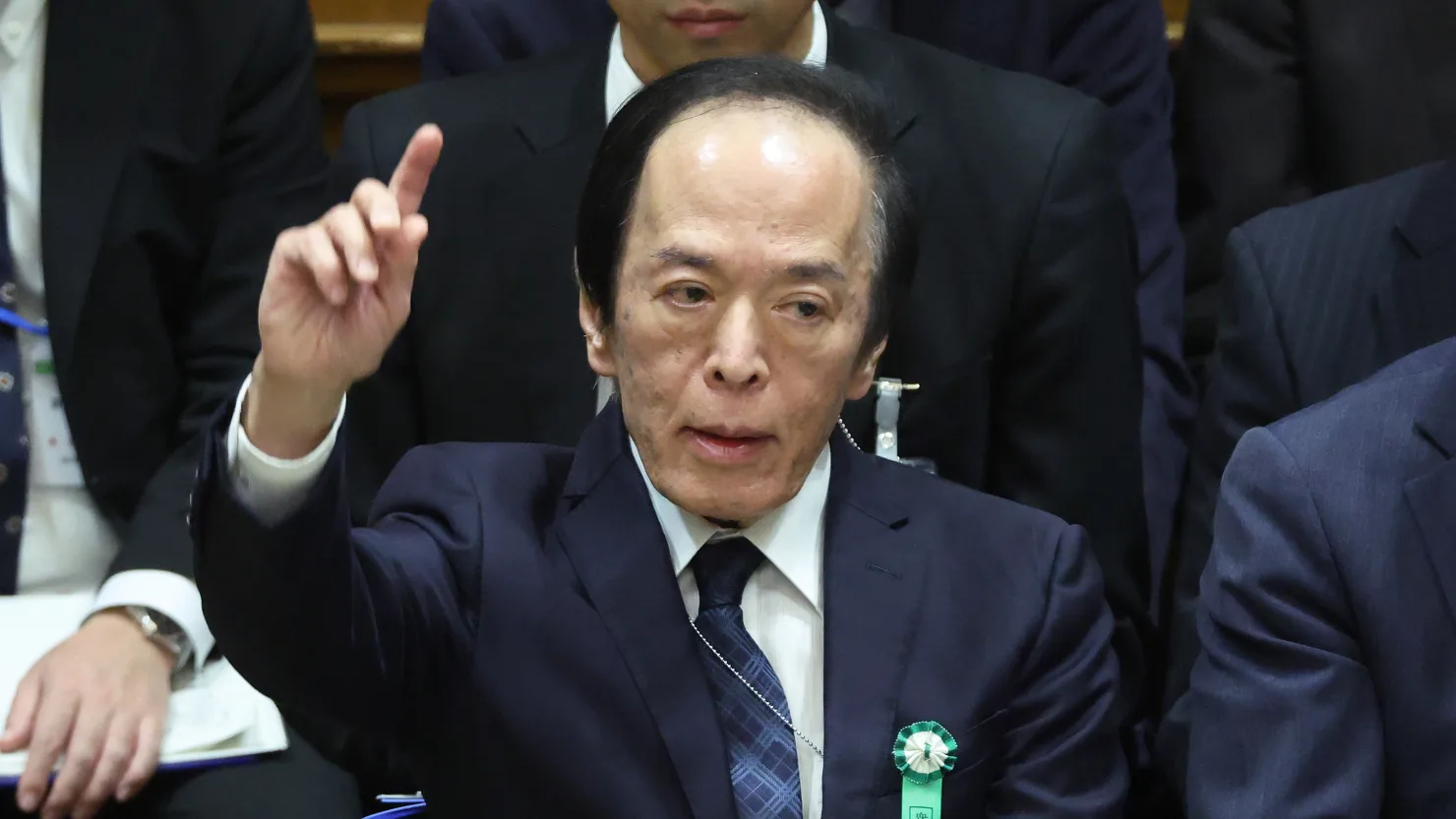
Governor Kazuo Ueda reportedly said earlier this month that it was difficult to estimate the terminal rate, with the central bank pegging it at 1% to 2.5%.
“Unfortunately, the neutral rate of interest is a concept for which we can only produce an estimate with quite a wide range,” Ueda told Japan’s parliament.
While efforts have been made to narrow the rate range, Ueda said that the BOJ must guide monetary policy without clarity on where exactly the neutral rate lies.
Carl Ang, fixed income research analyst at MFS Investment Management, said that an updated estimate on the neutral rate may be shared after the Friday meeting.